
What if your safari didn’t just tread lightly—but actually gave back to the land and people that made it possible? That’s the promise of a new kind of safari: one that goes beyond sustainability and into something even more powerful—regeneration.
Why You Can’t (and Shouldn’t) Try to Schedule Wildlife
Posted by Neville on Wed April 1, 2026 in Safari Industry Insights.
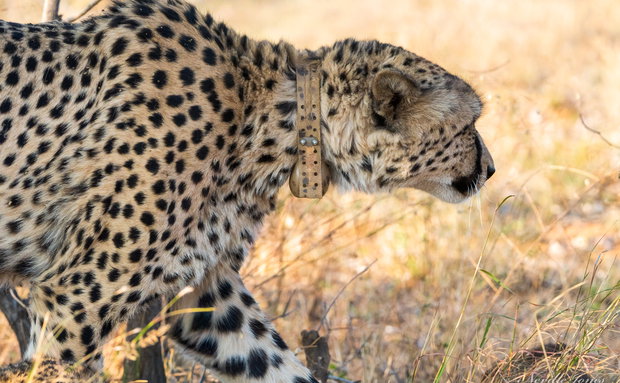
Can wildlife be predicted or guaranteed on safari? It’s a question we’re often asked — particularly by first-time travellers. The short answer is no. More importantly, trying to do so misunderstands what a safari is, and risks diminishing what makes it extraordinary.
Every so often, a new idea surfaces in safari travel: what if we could use tracking, data, or artificial intelligence to direct guests to the animals they most want to see?
It’s an appealing thought. But it rests on a false assumption — that wildlife behaves like a system waiting to be optimised.
Wildlife Is Not a System to Be Optimised
In most areas of modern life, more information leads to better outcomes. More data creates more control, more predictability, and greater efficiency.
A safari operates on a different set of principles.
Wild animals move according to territory, water, prey availability, seasonality, competition, breeding cycles, and instinct. Even in well-studied ecosystems, behaviour remains fluid and often unpredictable.
That unpredictability is not a flaw in the experience. It is central to it.
A safari is valuable precisely because it takes place in a living environment that does not perform on demand.
The Illusion of Precision
The idea of directing vehicles to preferred species based on live tracking suggests a level of precision that simply doesn’t exist in practice.
- Not all animals are collared
- Not all species are tracked in the same way
- Data may be delayed, intermittent, or incomplete
- Animals move quickly and change direction without warning
- Location alone does not explain behaviour
A leopard recorded in one location twenty minutes ago may no longer be there. It may have moved, hidden, or changed behaviour entirely.
Turning partial data into certainty creates false confidence.
The Role of the Guide
A skilled safari guide does far more than locate animals.
They interpret tracks, alarm calls, behaviour, habitat, weather, light, and timing. They make continuous judgement calls based on subtle cues that cannot be reduced to coordinates on a screen.
Great guiding is not a mechanical process. It is an act of judgement built through deep familiarity with the bush.
The best sightings often come not from following a signal, but from understanding a moment.
Conservation and Ethics Matter
Wildlife tracking exists primarily to support conservation and research — not tourism optimisation.
Using tracking data to direct guest experiences introduces risks: increased pressure on individual animals, repeated disturbance in sensitive areas, and a shift from observation to pursuit.
A well-run safari depends on restraint as much as access.
What Guests Actually Value
A safari is not a checklist.
It is not “lion ticked” or “leopard achieved.”
It is an unfolding experience — the anticipation before sunrise, the gradual build of understanding over several days, and the unexpected moment that defines the journey.
When everything becomes predictable, something essential is lost.
The Better Approach
The right way to improve safari outcomes is not to promise certainty, but to make better decisions about timing, region, guiding, and itinerary design.
We focus on placing guests in the right ecosystems at the right time of year, working with exceptional guides, and allowing enough time for the experience to unfold naturally.
If you’re planning a safari, our Safari Planning Guide is a good place to start.
In the End
The idea of scheduling wildlife is appealing. But it misunderstands both the bush and the purpose of safari travel.
Wildlife cannot be programmed. It should not be managed for our convenience.
It can only be encountered — on its terms.
And that is precisely what makes it worth experiencing.
Planning a Safari?
The most important decisions are made before you travel — where you go, when you go, and who guides you. Our Safari Planning Guide explains how to get this right.
Further Reading
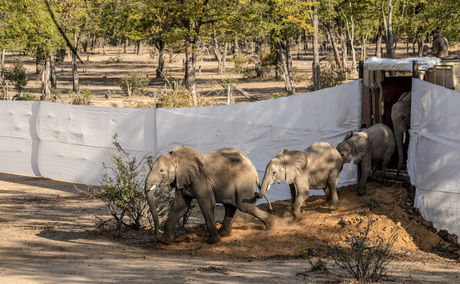
Regenerative Safaris: Where Luxury Helps Heal the Land
Sat March 22, 2025
Read This Article
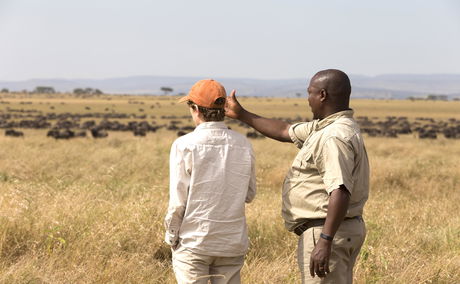
The Rise of Transformational Luxury Travel: Why Modern Affluent Travelers Seek More Than Just Indulgence
Fri March 14, 2025
Read This Article
Luxury travel is evolving beyond indulgence. For decades, luxury travel was defined by five-star accommodations, fine dining, and lavish spa treatments. However, today’s affluent travelers are seeking something far deeper than material indulgence. A new era of transformational luxury travel has emerged, where high-net-worth individuals prioritize personal growth, sustainability, and authentic experiences over traditional opulence.
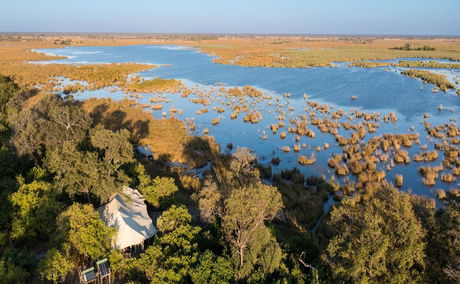
The Intersection of Luxury Travel & Conservation
Sat March 8, 2025
Read This Article
Luxury travel and conservation are often seen as opposing forces, but at Experiential Travel, we believe they are two sides of the same coin. True luxury is about deep, meaningful experiences that leave a lasting impact—not just on the traveler but also on the destinations they visit.
Share This Post